
My Day on Labor & Delivery as a Pelvic Floor PT
Our pelvic floor PT and clinic manager Dr. Rose Sievewright had the incredible opportunity recently to shadow and observe on the labor & delivery floor of Beth Israel Deaconess Medical Center, a renowned hospital in the heart of Boston. Follow along on her day on the floor and all the amazing births she was able to witness and the procedures and tools she learned about:
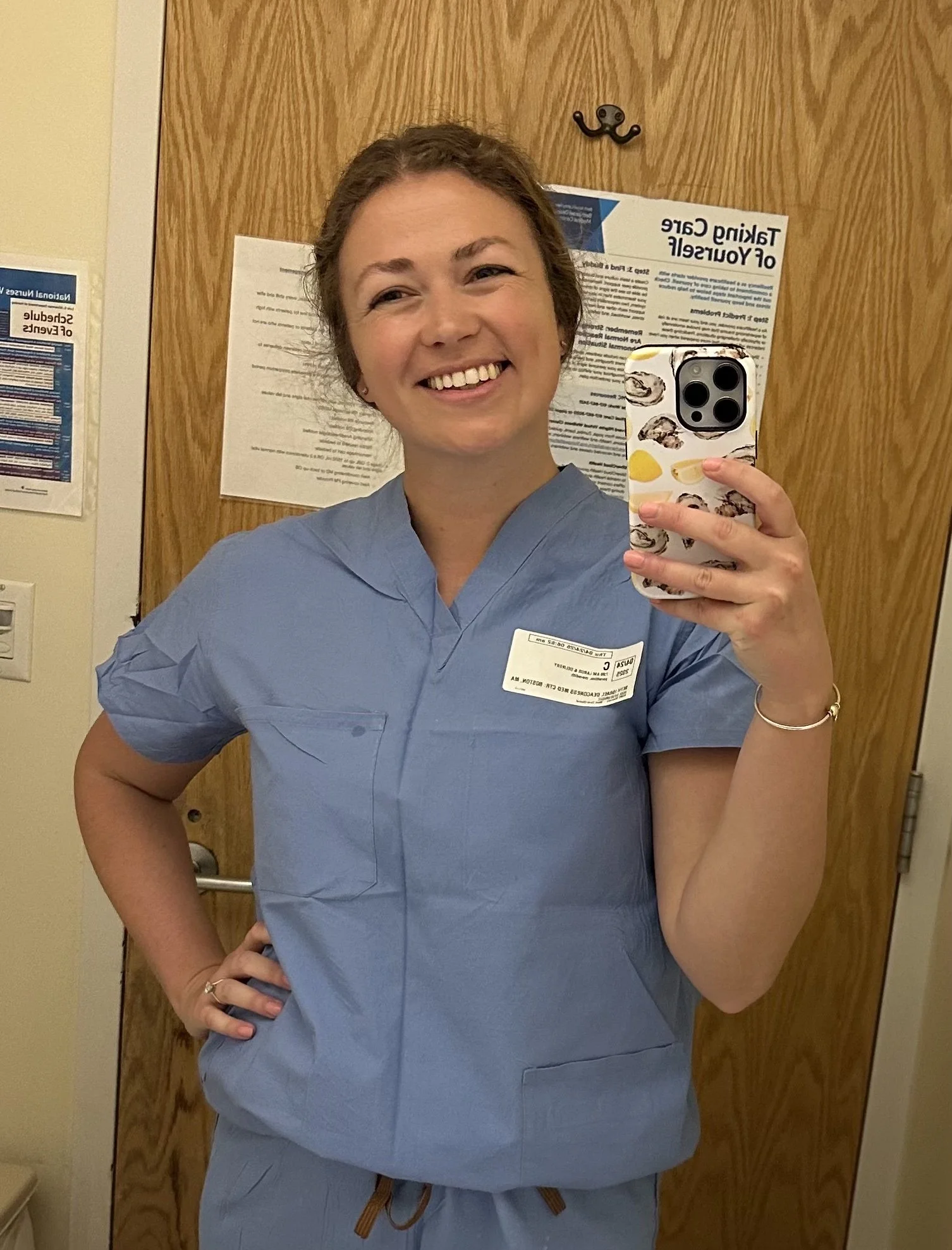
Excited to start the day on Labor & Delivery!
Preparing for birth is a huge part of my caseload at Foundations Pelvic Health. We spend lots of time with patients discussing perineal massage, how to push, labor and pushing positions, pain management, and birth preferences. However, many of us have not been on a labor and delivery floor at a hospital to see the ins and outs of what happens on the big day!
First Impressions on the Floor
I was lucky enough to have the opportunity to shadow an L&D nurse. I picked up some scrubs and headed to the floor. There was an immediate buzz with the shift change. Up on the big board was the list of patients for the day filled with information: from the level of cervical dilation & effacement, to the baby’s position, and how long each patient had been pushing. There were also big monitors tracking heart rate changes of parent and baby as well as contractions. Many patients were progressing well and it was clear there would be multiple birthday parties on the floor that day!
Supporting Active Labor
The first part of the day was largely focused on helping our assigned patient through active labor. I saw the variety of equipment, especially the peanut ball, be put to use. Our patient (and the baby) preferred sidelying positions initially, but we rotated between hands and knees, sidelying (with the peanut ball between the knees), the runners position, and flying cowgirl. I was surprised at how well the patient could move in the bed even with an epidural. We saw some quick changes with cervical dilation after a few position changes and soon the patient was ready to push!
Guiding the Push: Support in Action
The nurses played a huge role in coaching the patients through pushing. They would observe the monitors to watch for a contraction and discuss with the patient when she felt a contraction coming on. The nurses guided the patient through about 3 pushes per contraction to maximize the force of the contraction. Then the patient would rest for a minute until the next one. Patients pushed in a variety of positions. I saw patients push in sidelying, on their back holding both legs themselves, on their back with legs up on the bar, as well as on their back with the nurse and partner holding their legs. It validated why we review and practice pushing in different positions at birth prep visits at Foundations Pelvic Health.
In Awe of the Moment
Before cueing the patient to push, the nurse applied a hot pack and some olive oil to the patient’s perineum to protect against tearing. Our patient was having her third baby and only pushed 3 times before the baby was born! I was in awe. We recorded when the baby’s head was delivered, then the body. Then the doctor helped to deliver the placenta. The nurse was later able to show the patient her placenta (or the baby’s apartment as she called it) and it was so fascinating to see the amount of blood vessels throughout the sac. The doctor performed uterine massage to help stop the bleeding and promote the uterus to contract. I was surprised at how firm the uterus was just an hour after birth!
Into the OR: Twin Cesarean Section
Then I was whisked off to the OR to see a cesarean section for twins! Each baby had their own placenta and were delivered within a minute of each other. I was amazed at the speed of the surgeons with delivering the babies and then also with suturing everything back. Seeing the closure of all the layers and the incision gave me even more insight into why there can be so many restrictions with C-section scars.
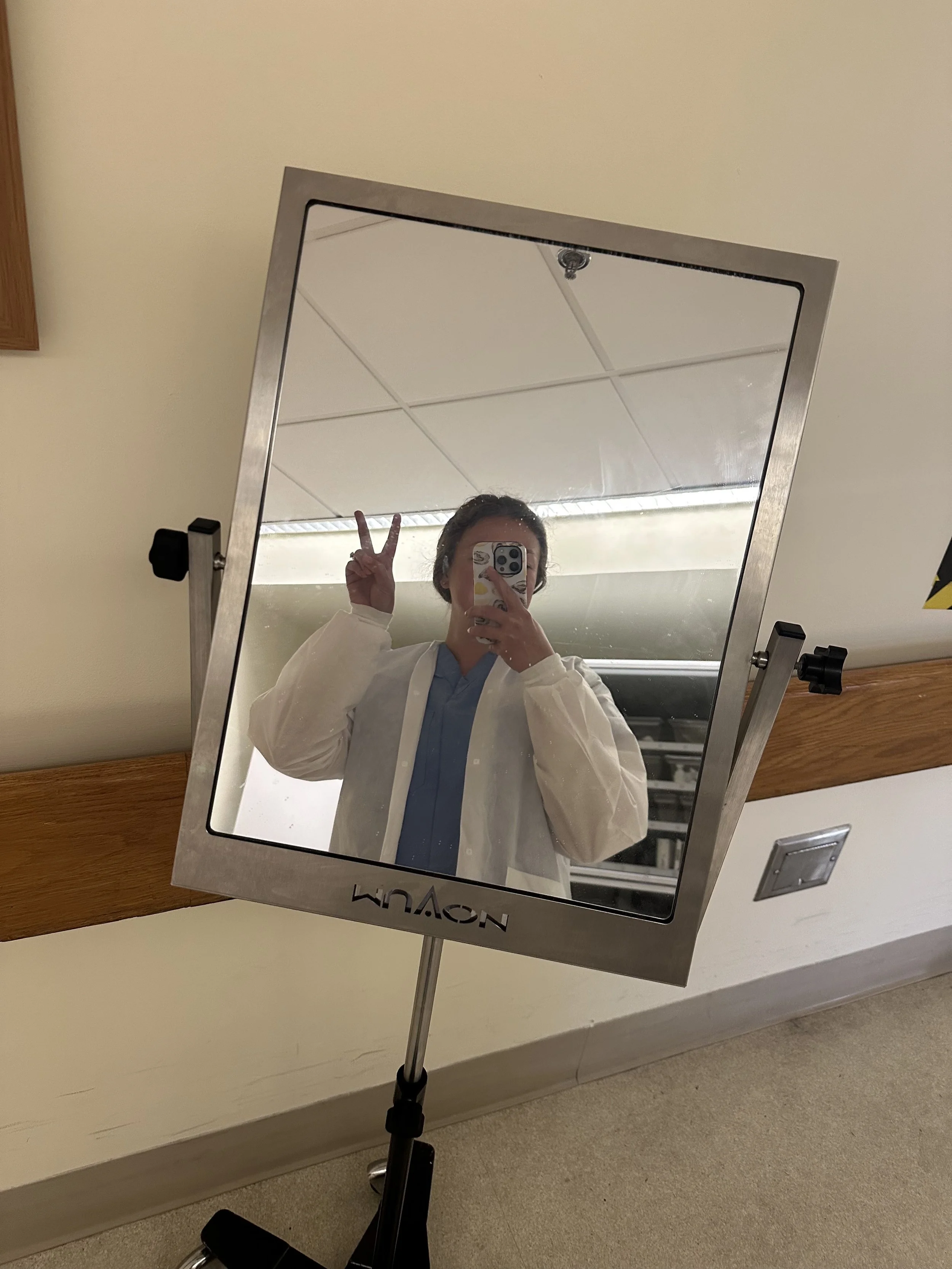
Mirror so mama can see baby crowning.
Lunch, a Moment for Downtime and a Floor & Tool Tour
After lunch, we had some downtime to recover from a busy morning. We brought our patient down to the postpartum floor to recover. Then the nurse showed me the different areas of the floor from triage, to observation, and the ORs. She was able to show me some other tools on the floor like the Foley balloons to help with inductions, mirrors so that patients can see their babies crowning, and the differences in the hospital beds compared to other floors.
Flipping a Breech Baby with External Cephalic Version (ECV)
Later that afternoon, we worked with a patient who was 39 weeks pregnant with a baby who was breech. She was at the hospital for an external cephalon version (ECV) to get the baby in a better position to attempt a vaginal birth. The procedure happens in the OR in case a c-section needs to be performed. This patient was able to have an epidural for the procedure which significantly helped with pain levels. The patient sat on the edge of the bed in a forward flexed position. The nurse walked her through each part of the procedure and helped her into the position. The anesthesia team felt the patient's spine and then placed the catheter of the epidural into her low back. The team of 2 doctors was then able to successfully perform the ECV within a few minutes. The team monitored the baby’s heart rate following and then the patient was transferred to an observation room where she started to have contractions.
Closing Out & Reflections from an Unforgettable Day
Then it was time to go! The 12-hour shift was a whirlwind! Check out my mini vlog about the day, along with some more thoughts!
Below, I answered some questions that I received about my fun day in the life of a pelvic floor PT on L&D in a Boston hospital:
What was your favorite part of the day?
I had so many amazing moments throughout the day, but my favorite was seeing my first vaginal birth! It was a privilege to be in the room and I was truly in awe. In awe of the birth itself, the strength of the mom, the steadiness of the nurses, and the calmness of the doctors. I couldn’t stop saying wow!
Did your time on L&D change the way you approach birth prep with your patients?
The time on the floor was very affirming of what we teach at Foundations Pelvic Health in our birth prep visits! I saw first-hand the variety of labor and pushing positions utilized as well as different cues for breathing while pushing that we focus on in the clinic. One thing that I’ll continue to put emphasis on in our visits is birth preferences and advocating for yourself! The nurses were amazing at advocating for their patients but things can happen so quickly that it’s helpful for everyone to be on the same page. Even though it can be daunting, having back and forth dialogue with your team of doctors can be beneficial to ensure your understanding of different choices.
What was the most surprising or unexpected thing you learned during this experience?
I was surprised at how quickly the uterus becomes smaller and firmer again. Once the baby was delivered, the doctor performed uterine massage for a few minutes. After an hour, we palpated the uterus from the abdomen and it had already contracted more. It’s amazing to think of the uterus as one big muscle!
Hi! We are Boston’s pelvic floor physical therapy experts specializing in all things bladder, bowel, sexual dysfunction & pregnancy and postpartum specialists.
If you’re struggling or have questions about preparing for labor and delivery, we’d love to help you at Foundations Pelvic Health - located in the South End of Boston, MA.