
Understanding and Treating ‘Mommy Thumb’
Why Your Wrist Hurts After Having a Baby (and What to Do About It)
At our Boston South End clinic, we treat pregnant and postpartum women every single day, and while pelvic floor health is at the heart of what we do, it’s never the only thing we focus on. Pregnancy and postpartum bring whole-body changes (from feet and hands to posture and breathing) and our approach reflects that.
At Foundations Pelvic Health, we are a team of perinatal and pelvic floor therapy specialists in Boston. We are dedicated to helping women feel empowered and strong throughout their pregnancy and postpartum recovery.
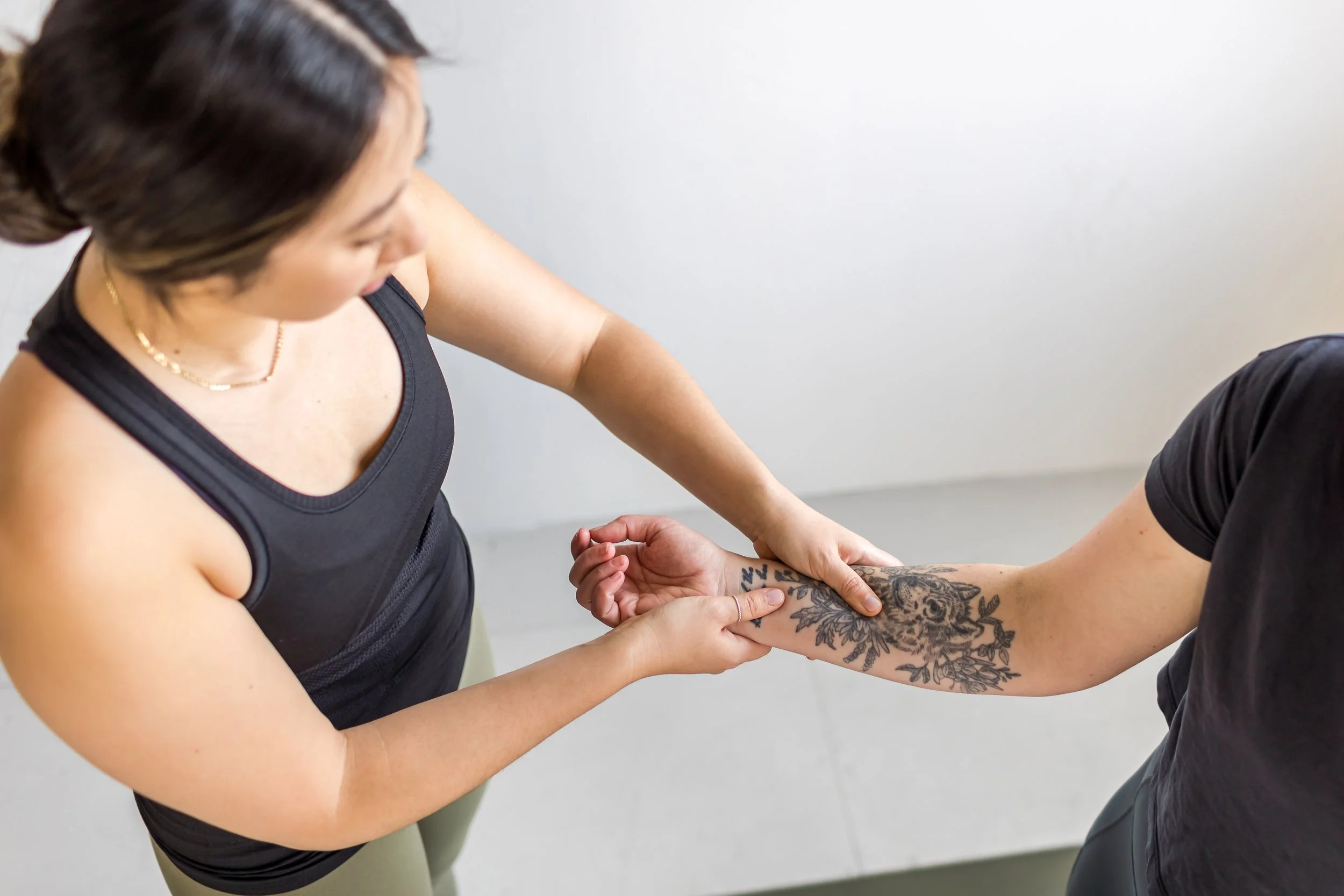
A postpartum mama getting her thumb, wrist and forearm assessed by our pelvic floor PT.
What Is “Mommy Thumb”?
If you’ve started feeling pain at the base of your thumb or wrist while caring for your newborn, you might be experiencing what’s commonly known as Mommy Thumb, or, in medical terms, De Quervain’s tenosynovitis.
This painful condition happens when the tendons that control thumb movement (the extensor pollicis brevis and abductor pollicis longus) become irritated or inflamed. The result: pain, swelling, and stiffness that make even simple tasks (like lifting your baby or opening a jar) uncomfortable.
Although it’s often seen in new parents, it can affect anyone who frequently uses their hands for repetitive motions such as texting, scrolling, or lifting heavy items.
Common Symptoms
You might notice:
Pain at the base of the thumb or along the wrist
Swelling around the thumb or wrist area
Stiffness or difficulty moving the thumb without pain
A catching or snapping sensation when moving the thumb
Pain that worsens when gripping bottles, jars, or your phone
Increased pain with lifting or carrying (your baby, groceries, laundry baskets)
Why It Happens
Caring for a newborn often means frequent lifting, holding, and carrying—all with wrists bent and thumbs extended. Over time, that position can put extra stress on the thumb tendons, leading to irritation and inflammation.
Poor posture, fatigue, and muscle weakness can add to the strain, especially if your upper-back and shoulder muscles aren’t supporting your movements. Sleeping with your wrist curled under your pillow can also place increased pressure at this area.
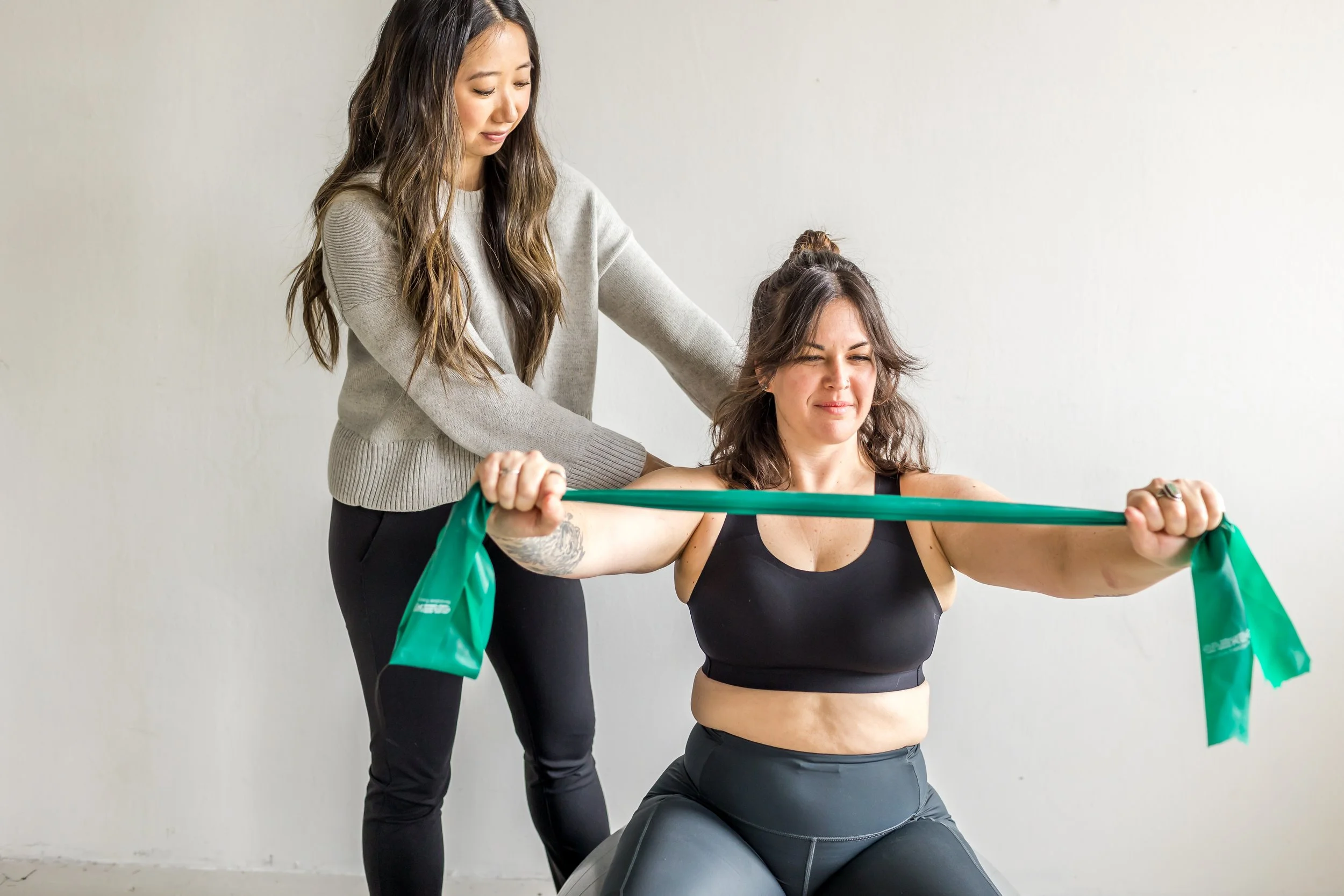
A postpartum mama doing her postural strengthening exercises with her pelvic floor PT to relieve her mommy thumb pain.
How to Prevent or Reduce Pain
Small changes in daily habits can make a big difference:
Use good lifting mechanics: When picking up your baby, keep your thumbs tucked in and lift with your whole body: bend your knees, not just your wrists.
Take breaks: Give your wrists and hands regular rest throughout the day.
Strengthen and stretch: Gentle wrist and thumb stretches, plus strengthening for your wrists, shoulders, and postural muscles, can help build resilience.
Use ice and NSAIDs: Ice the area a few times a day and use anti-inflammatories as recommended by your provider.
Consider a brace: Wearing a supportive brace during the day can help limit painful movements and allow healing.
See a pelvic health physical therapist: We can provide hands-on treatment, teach tendon-gliding exercises, address postural issues, prescribe appropriate strengthening exercises, and address whole-body mechanics to keep symptoms from returning.
Ready to Feel Better?
At our South End Boston clinic, we work with pregnant and postpartum women every day. While pelvic floor health is central to what we do, it’s just one part of the bigger picture. Pregnancy and postpartum affect the entire body, and our approach is designed to support all of it.
That’s what sets Foundations Pelvic Health apart: whole-body, evidence-based care that meets you where you are in pregnancy and beyond.
If postpartum thumb or wrist pain is slowing you down, you don’t have to struggle through it. Our team of doctors of physical therapy at Foundations Pelvic Health can help you relieve that pain, keep moving comfortably, and feel supported throughout your pregnancy and postpartum journey. Book your appointment today and take the first step toward moving with confidence again.